
 | |
| Bernard Kessler | |
| Born | 1818 |
|---|---|
| Died | 1876 |
| Gender | Male |
| Organization | Hartwell Timber Co. |
Overview
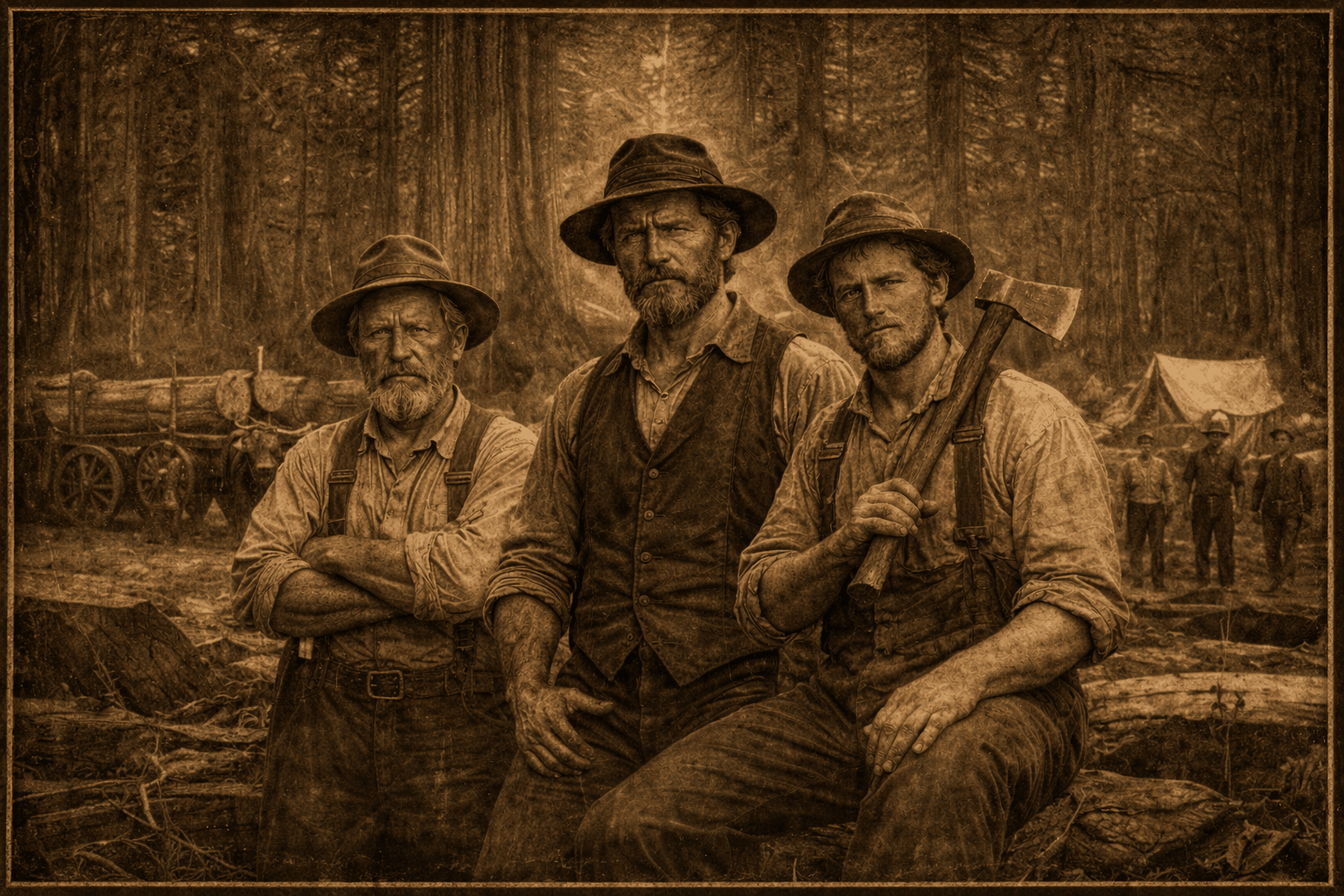
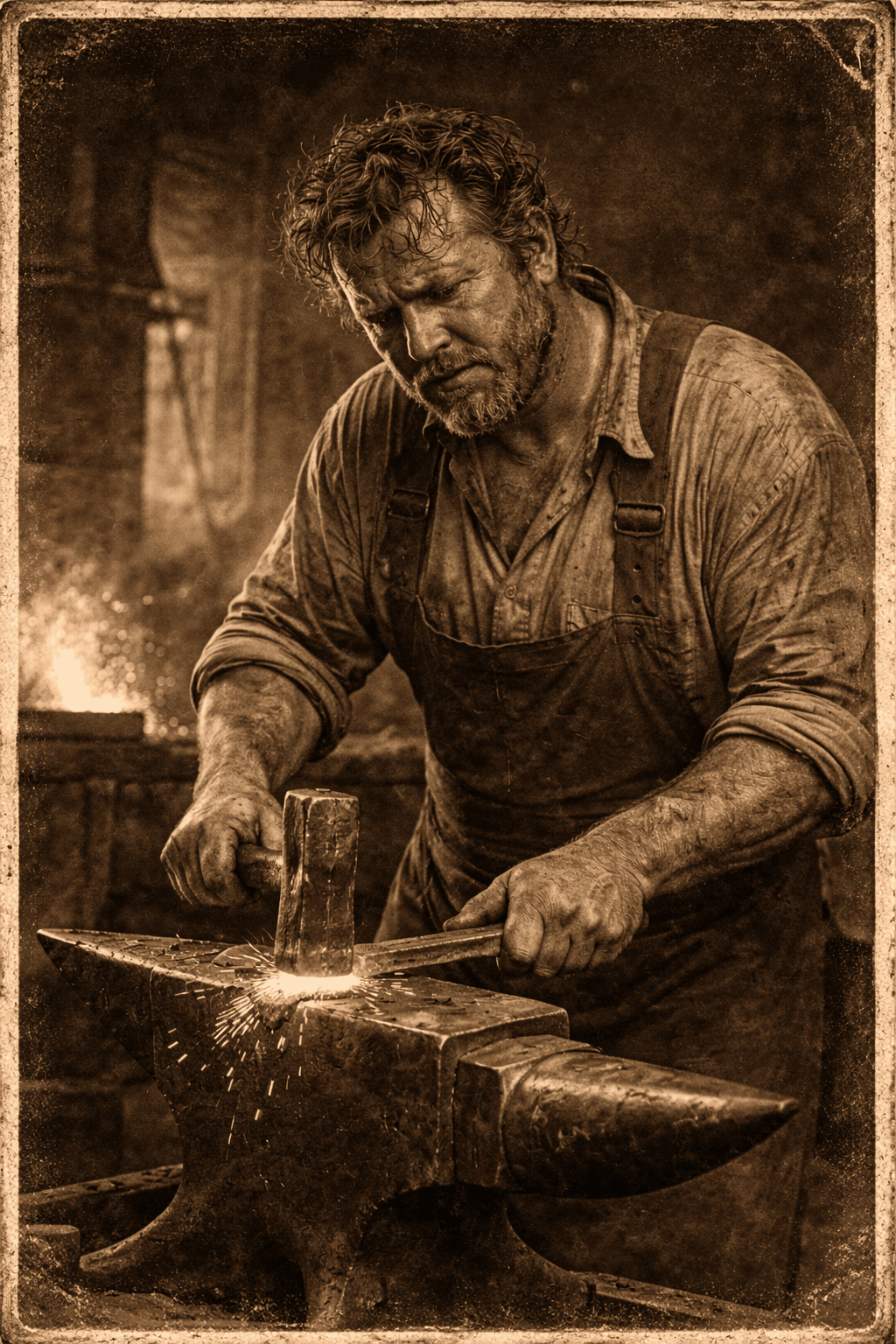
Bernard Kessler was one of the older men employed by Hartwell Timber Co., already in his forties by the time Elias Hartwell brought him into the company. A skilled blacksmith with years of hard trade behind him, Bernard was invaluable in the early years of the operation, when broken tools, damaged fittings, and failing hardware could cripple work for days if no one knew how to mend them. He was also a drunk, a brawler, and by most accounts a difficult man to live with. His skill kept him useful for years. His temper and his drink made sure he was never easy company.
Before Hartwell Timber Co.
Bernard Kessler was born sometime in the 1810s or early 1820s, likely somewhere in the eastern United States or among German immigrant communities moving westward in search of work. However he began, by adulthood he had become a trained blacksmith, and a good one. He knew iron, knew heat, knew tools, and knew how to keep practical things alive well past the point where other men would have thrown them away.
By the time he came west, Bernard had already spent years at the forge. His hands were thick, scarred, and heavily calloused from a lifetime of gripping hammers, tongs, and worn handles. He had the kind of body hard labor leaves behind: strong in the shoulders and forearms, worn in the joints, and carrying age more heavily than men who had lived gentler lives.
He did not come west as a dreamer. If he ever had dreams, they had already been beaten into something more practical. He came because timber camps, freight routes, mills, and growing frontier towns all needed ironwork. Men could not cut, haul, or build for long without someone to mend what constant use broke apart.
He was married, and he and his wife had children, but his household was unstable long before it finally broke. Bernard’s home life was known to be loud, ugly, and often chaotic. Drink sharpened his temper, and his temper sharpened everything else.
Years Under Hartwell
Elias Hartwell did not hire Bernard because he liked him. He hired him because he was useful.
In the rough early years of Hartwell Timber Co., a man like Bernard Kessler was difficult to replace. Axes dulled. Chains snapped. Wagon fittings bent. Mill hardware failed. Spikes, braces, hooks, hinges, and iron shoes all wore out under frontier conditions faster than supply lines could reliably replace them. Bernard could repair what others could not, and he could improvise what had never been properly made in the first place.
He worked first as the company’s blacksmith and iron man, keeping tools in service, repairing wagon hardware, fitting ax heads, straightening bent pieces, and maintaining the practical metalwork that allowed Hartwell’s crews to keep moving. In an operation built on relentless output, Bernard’s forge became one of the hidden engines of the whole enterprise.
That skill bought him tolerance.
Men knew Bernard was dangerous in the way drunks often are: not because he was always violent, but because no one could be sure when he would become so. He argued easily, held grudges too long, and was known to start fights over slights that sober men would have forgotten by morning. Hartwell tolerated it as long as Bernard’s usefulness outweighed the disruption he caused.
For years, it did.
But Bernard belonged to an older way of working. He trusted what he knew, distrusted change, and took insult at the suggestion that newer methods might improve on old ones. As Hartwell Timber Co. grew and mill technology advanced, Bernard adapted poorly. The company became less dependent on one stubborn craftsman who could mend anything by hand and more dependent on men willing to work with changing machinery, tighter systems, and more modern methods.
Bernard did not bend. He drank harder. He fought more. And slowly, the company began to move past him.
Dismissal
By the later years of his employment, Bernard had become more liability than asset. His skill was still real, but no longer rare enough to excuse the damage that came with him. He resisted newer sawmill practices, clung to old habits, and increasingly showed up as a man the company had to manage rather than rely upon.
In the end, Hartwell Timber Co. dismissed him.
No grand scandal marked the event. No single explosion of temper was needed. Bernard had simply become too difficult, too outdated, and too compromised by drink to justify keeping him on. In another era he might have lasted longer. In the Hartwell operation’s more developed years, there was less room for men who could not change.
By then, his family life had already collapsed. His wife, worn down by years of instability, took the children and left him, returning to her mother’s home in Kentucky. Bernard did not follow.
Later Years and Death
The last years of Bernard Kessler’s life were bleak ones.
Stripped of steady work, separated from his family, and left with little but his habits, Bernard drifted through Briarmont’s rougher edges and whatever taverns or temporary jobs would still have him. Men who remembered him later spoke of him with a mix of contempt and reluctant respect. He had once been one of the most useful men in camp. By the end, he had become a cautionary tale.
He died five years after his dismissal, stabbed in a bar fight.
There was no respectable end waiting for him, no gathered household, no children at the bedside, no final reconciliation. Whatever notice his death received was brief. He was buried in an unmarked grave somewhere near the coast, likely in ground given over to men without money, influence, or family present to claim them. Over time, even the exact location of that grave was lost.
For all that, Bernard Kessler was not entirely forgotten. His name lingered in company memory because Hartwell Timber Co. had once depended on his hands, however much the rest of him made that dependence costly.