 The Lore · Full history Briarmont Wiki
A Timeline of Briarmont
-
1848
Gold in the Foothills
People had lived along this coast long before any settler came to it. In January 1848 gold turned up at a sawmill in the Sierra foothills, and within a year thousands were pouring into California.
-
1850
Statehood
California became a state in September 1850, and San Francisco, a city that kept burning down, needed lumber by the shipload.
-
 1852
Mills on the North Coast
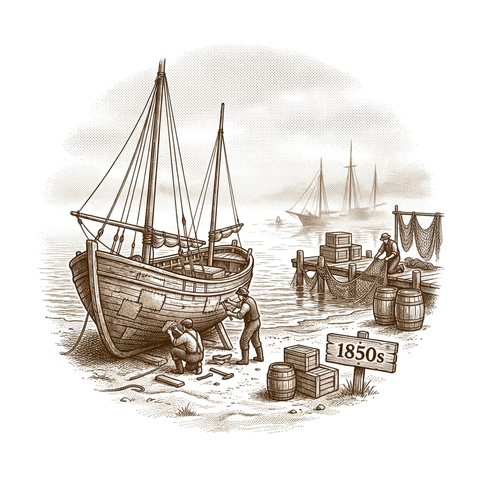
By 1852 the first sawmills were running on the north coast, cutting lumber for San Francisco.
-
 1857
Hartwell Timber Co.
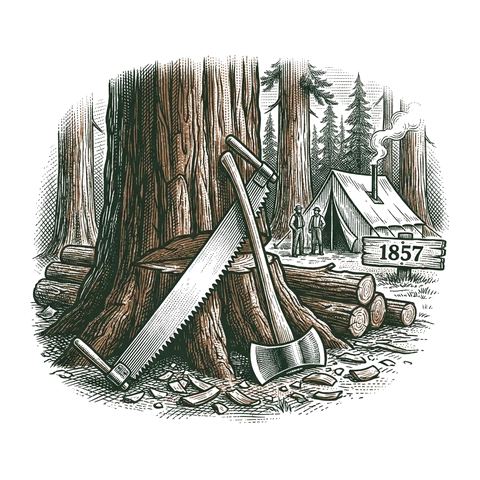
Elias Hartwell of Rockport, Maine, came west in 1856 for lumber while most newcomers wanted gold. In 1857, not yet twenty, he founded Hartwell Timber Co. with eight men who cut redwood above this coast and lived in camp. He was hard on them and good at the work.
-
1862
The Landing
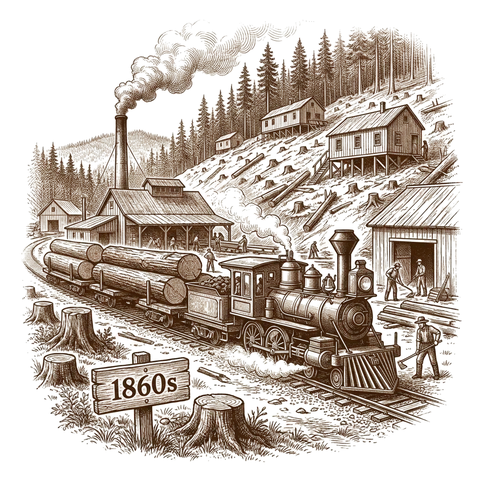
Hartwell's new mill on the bluffs began cutting. Hiram Spurling built a chute to send its lumber down to schooners in the harbor, and Orrin Lathrop opened a store on the mill road.
-
 1866
A Town at Last
Merchants, tradesmen and families followed the mill wages, and by 1866 the camp had become a town with more boarding houses than churches.
-
1869
The Railroad
The transcontinental railroad was finished in May 1869, opening the markets back east.
-
1872
Hartwell County
Hartwell County was formed in 1872 with Briarmont as its seat. For years, if you worked in Hartwell County, you worked for the mill or for someone who did.
-
1882
The Steam Donkey
From 1882 the steam donkey, a steam-powered winch, hauled logs out of the woods quicker than any ox team, and crews cut far faster to keep up.
-
1890
Parks for the Big Trees
In 1890 giant sequoia groves in the Sierra Nevada became national parks, and Californians began talking about saving forests as well as cutting them.
-
1893
The Panic
A nationwide financial panic in 1893 sent lumber prices down and left mills along this coast quiet.
-
 1896
The Old-Growth Survey
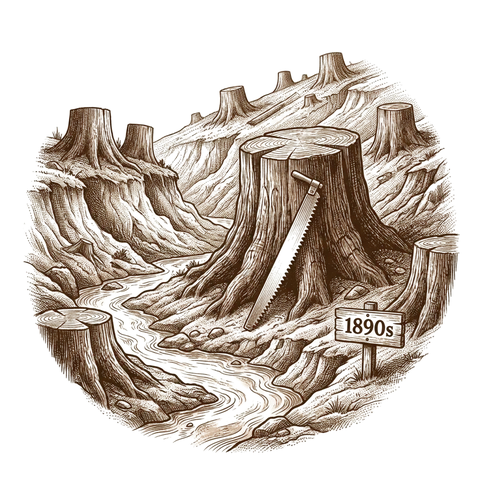
By 1896 the bare hillsides above town were slipping, and the winter floods had grown worse. Hartwell slowed the cutting and paid for a small survey of the old growth left on the upper ridges, one of the first counts of what had not been cut. His surviving letters are said to speak of the land "answering back"; the men put on short hours had plainer words for it.
-
1901
The Improvement Club
Cordelia Lathrop and other women founded the Briarmont Improvement Club, over the objections of most men in town, Elias Hartwell among them.
-
1906
The Earthquake
After the San Francisco earthquake and fire of April 1906, the rebuilding took lumber from mills up and down this coast.
-
 1911
Hartwell's Will
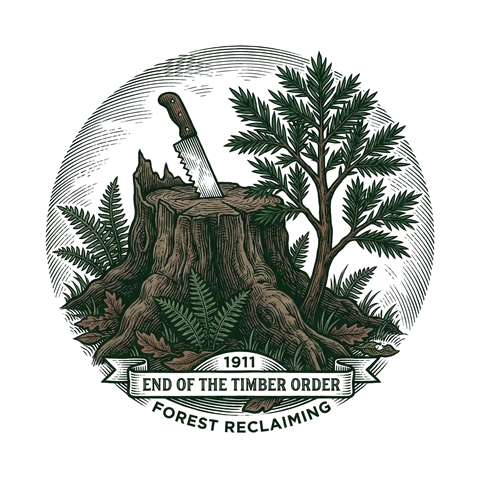
Elias Hartwell died in Briarmont in 1911, unmarried and in debt. His daughter, Adelaide Hartwell, was his executor. The milling works were sold to pay what the company owed, and the company ended with them. He left the estate on the rise above town "to the use and betterment of Briarmont and its people, in whatever manner may be deemed fitting by those who remain," and she spent years arguing with lawyers and Town Hall over what manner that was.
-
 1918
The Institute
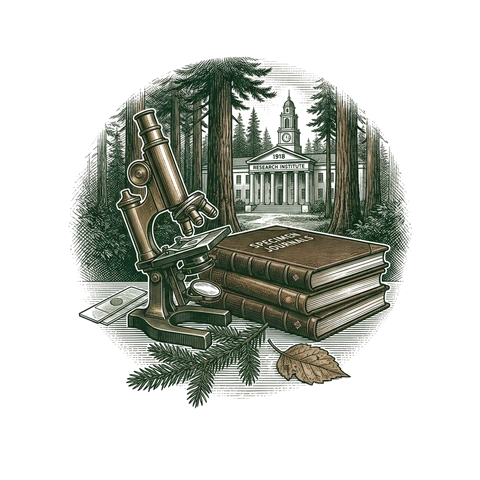
After several idle years, the town's trust founded the Oakridge Institute of Forestry and Land Sciences on the estate, as Adelaide Hartwell had pressed for, with no tie to the old company. Working beside the crews still logging the region, it trained foresters and surveyors and studied how to log without ruining the land. The Crenshaw Oak was planted the same year as a public sign of restoration.
-
 1947
Oakridge College
On July 1, 1947, the Institute was accredited as Oakridge College, after nearly thirty years as a forestry school, with Agnes Corliss as its first president; the arts, the humanities and the coastal sciences came later.
-
1964
The Christmas Flood
The Christmas flood of December 1964 hit the north coast hardest where logging had stripped the slopes.
-
1968
Redwood National Park
Redwood National Park was established in October 1968 around some of the north coast's last old-growth redwood.
-
2026
Briarmont Today
The old mill buildings stand beside cafés and galleries, and the harbor that once shipped timber is given over to research vessels, quiet mornings and passing fog. The Oakridge campus keeps growing on the old Hartwell estate, and its students do their fieldwork on the hillsides the mill cut bare.