
 | |
| Arthur Bellamy | |
| Born | 1902 |
|---|---|
| Died | 1962 |
| Gender | Male |
| Place of Death | Unknown |
| Eye Color | Brown |
| Hair Color | Salt & Pepper |
| Height | 6'1" |
| Organization | Oakridge College |
Overview
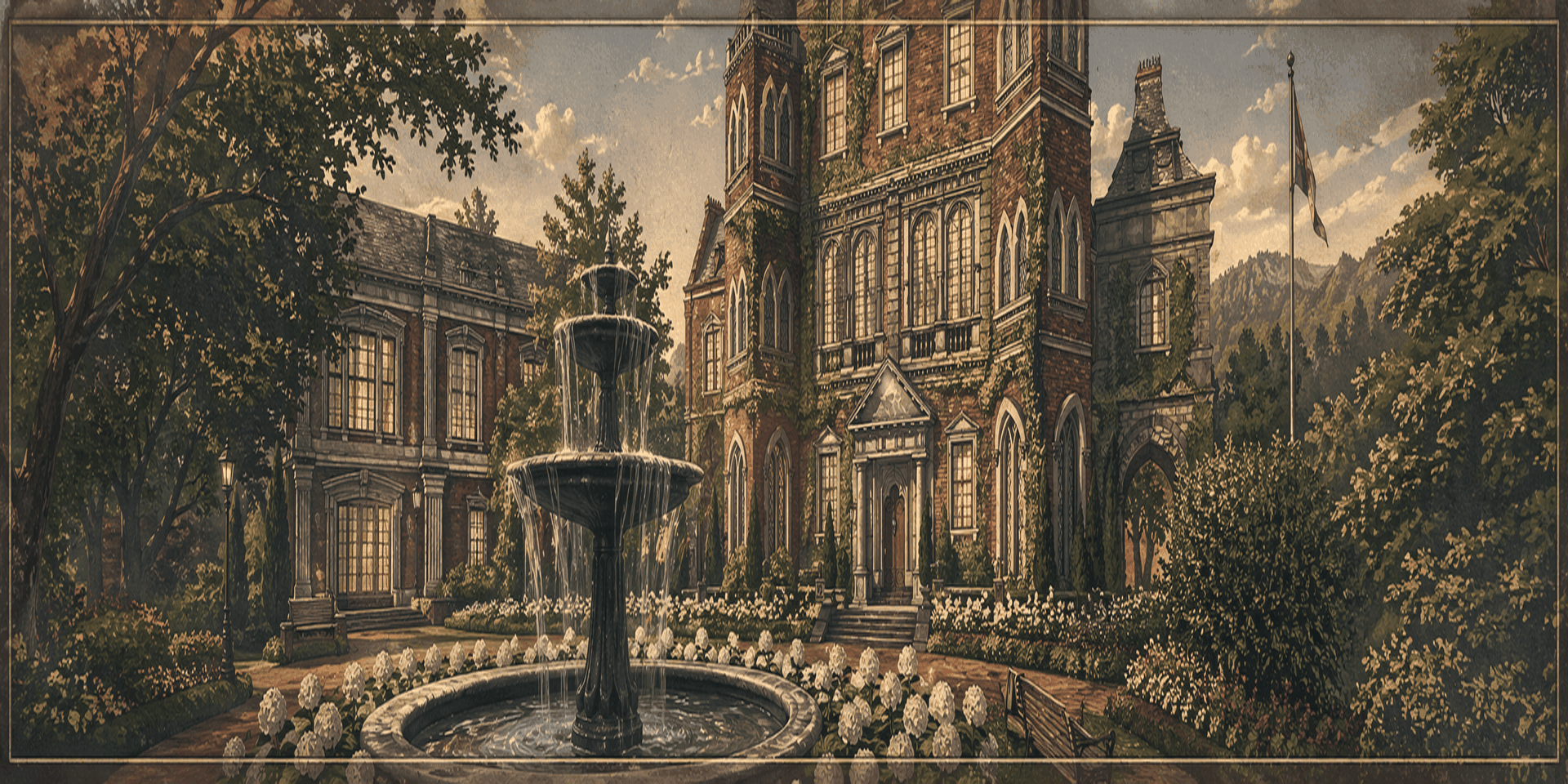
Arthur Bellamy was one of the central figures in Oakridge’s transition into a fully accredited college. A geologist from Montana, he arrived in Briarmont with a strong academic background, a disciplined administrative style, and a clear understanding of what Oakridge needed in order to grow.
In 1947, as Oakridge became a California state-accredited college, Bellamy was appointed the first President of Oakridge College. His appointment placed him at the center of one of the school’s most important institutional turning points.
To supporters, Bellamy represented progress, structure, and legitimacy. He knew how to work with boards, state officials, faculty, and donors, and he brought a more formal style of leadership to Oakridge. To critics, he marked the beginning of a less personal and more ambitious era in the college’s history.
His disappearance in 1959 made his legacy even harder to separate from rumor, institutional memory, and Briarmont’s long history of unresolved cases.
Appearance
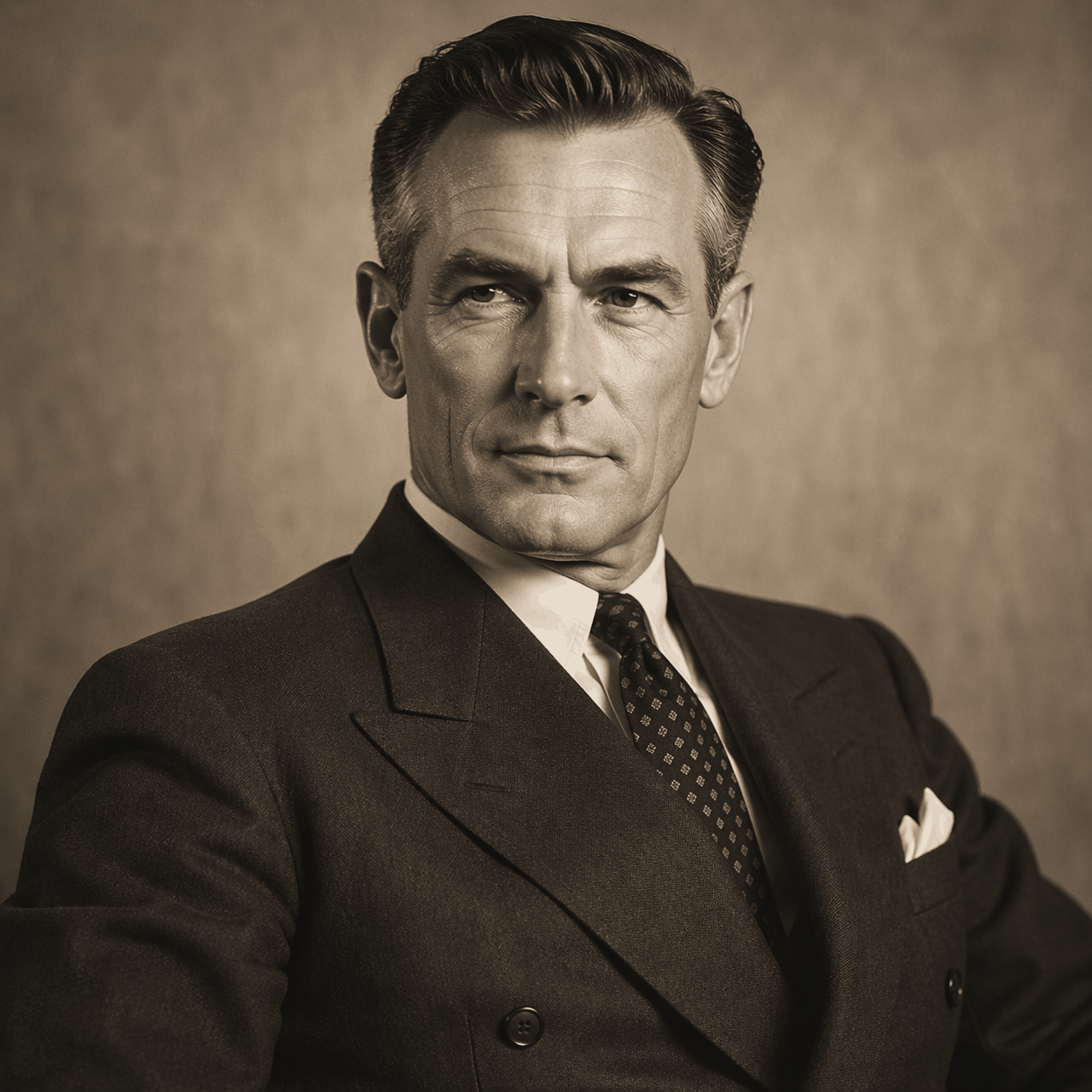
Arthur Bellamy was a tall, broad-shouldered man with a disciplined and composed appearance. In his fifties, he remained in good physical condition and presented himself with care.
He was handsome in a reserved way, with steady eyes, strong features, and a controlled expression. He dressed formally, usually in well-cut suits, and carried himself with confidence. Bellamy understood that appearance mattered in leadership, and he used it deliberately.
Background
Arthur Bellamy was born in Butte, Montana, in 1902. Raised in one of the most important mining cities in the American West, he developed an early familiarity with geology, industry, and the relationship between land and institutional power. That background shaped both his academic interests and his later administrative style at Oakridge.
He later trained as a geologist and built a career around scholarship, structure, and institutional standards. He was respected not only for his academic ability but for his understanding of how schools, boards, and administrative systems worked.
By the time he came to Oakridge, Bellamy already had the reputation of a serious, competent, and upward-moving academic administrator.
Role at Oakridge
Bellamy arrived at Oakridge during its transition from the Oakridge Institute of Forestry and Land Sciences into a broader accredited college.
In 1947, he became the first President of Oakridge College. He served as the public face of accreditation, academic expansion, and administrative modernization. Under his leadership, Oakridge presented itself as a more formal institution with a wider future.
For some, Bellamy was exactly the leader Oakridge needed. For others, his presidency represented a shift away from the school’s earlier character. Both views have remained part of how he is remembered.
Personality
Arthur Bellamy was ambitious, disciplined, and competitive. He was known for his composure, careful speech, and ability to stay controlled under pressure.
He valued order, standards, and institutional seriousness. He tended to approach problems through systems and long-term planning rather than emotion. Supporters saw this as professionalism. Critics found him distant, controlling, or difficult to read.
Marriage and Family
Arthur Bellamy was married and had two daughters. His family life contributed to his public image as a respectable academic leader.
Little is recorded in detail about his household, but his marriage and children were part of how Briarmont perceived him. He was seen as a man who fit the social expectations of his position: educated, established, and respectable.
Relationship with Theodore Crenshaw
Arthur Bellamy is often compared with Theodore Crenshaw because they represented different phases of Oakridge’s history.
Crenshaw belonged to Oakridge’s founding era and was closely associated with restoration, fieldwork, patience, and local trust. Bellamy belonged to the college’s next phase and was associated with accreditation, formal structure, and institutional growth.
The contrast shaped how both men were remembered. Crenshaw was seen as gentler and more personally connected to Briarmont. Bellamy was seen as more formal, administrative, and focused on Oakridge as an institution.
Whether Bellamy admired Crenshaw, resented him, or simply saw him as part of an earlier chapter depends on who is telling the story.
Relationship with Briarmont
Arthur Bellamy held an important but somewhat distant place in Briarmont.
He was respected by trustees, officials, and those who valued modernization. He looked and behaved like a man of authority, which reassured many people during a period of change.
At the same time, he was not remembered as especially beloved. He was connected to Briarmont through Oakridge, but he did not seem rooted in the town the way some earlier figures were. People often remembered him as important before they remembered him as familiar.
Connection to the Yarrow League
Arthur Bellamy’s relationship with The Briarmont Yarrow League was cautious and formal.
He understood that the League influenced town life, even without official authority. As a politically aware administrator, he was unlikely to ignore that influence.
Still, he was not closely tied to the League in the way Theodore Crenshaw had been. Bellamy’s priorities were administrative and institutional. If he respected the League, it was likely as a local power structure rather than as a personal community.
Disappearance
In September 1959, Arthur Bellamy disappeared in the forests surrounding Briarmont along with three Oakridge students. The students’ names were never released to the public.
The case became one of the most serious incidents in Oakridge and Hartwell County history. Bellamy was not an ordinary missing person. He was the first President of Oakridge College and a public figure tied directly to the college’s reputation.
No bodies were found. No clear trail was established. Searchers recovered no reliable evidence of violence, accident, or deliberate flight.
The disappearance also drew attention because of the three unnamed students. Only a few years earlier, from June 1950 to June 1953, the Selective Service drafts had been activated for the Korean War for men aged eighteen to thirty-five. By 1959, the draft period had passed, but questions about young men, duty, avoidance, trauma, and institutional responsibility still lingered. Rumors formed quickly around the case.
The investigation became even more infamous when Sheriff Harold “Hal” Humbolt disappeared in mid-September 1959 while the Bellamy case was still active. Humbolt’s badge was later found in the forest, but no body or conclusive evidence was recovered.
In 1962, the disappearances of Arthur Bellamy, Sheriff Harold “Hal” Humbolt, and the three unnamed Oakridge students were designated as cold cases.
Legacy
Arthur Bellamy’s legacy at Oakridge is tied to accreditation, expansion, and institutional consolidation. He helped guide the school into its accredited college era and gave it a stronger public identity at a decisive moment.
His legacy is also debated. To some, he was the necessary architect of Oakridge’s future. To others, he marked the point when the college became more formal, more ambitious, and less shaped by its earlier intimacy.
His disappearance made that legacy harder to resolve. Because Bellamy vanished with three unnamed students, and because Sheriff Humbolt disappeared while investigating the case, Bellamy became part of one of Briarmont’s most enduring mysteries.
He is remembered not only as Oakridge’s first accredited-era president, but as the man whose disappearance tied the college, the Sheriff’s Department, and the surrounding forest into the same unresolved story.