
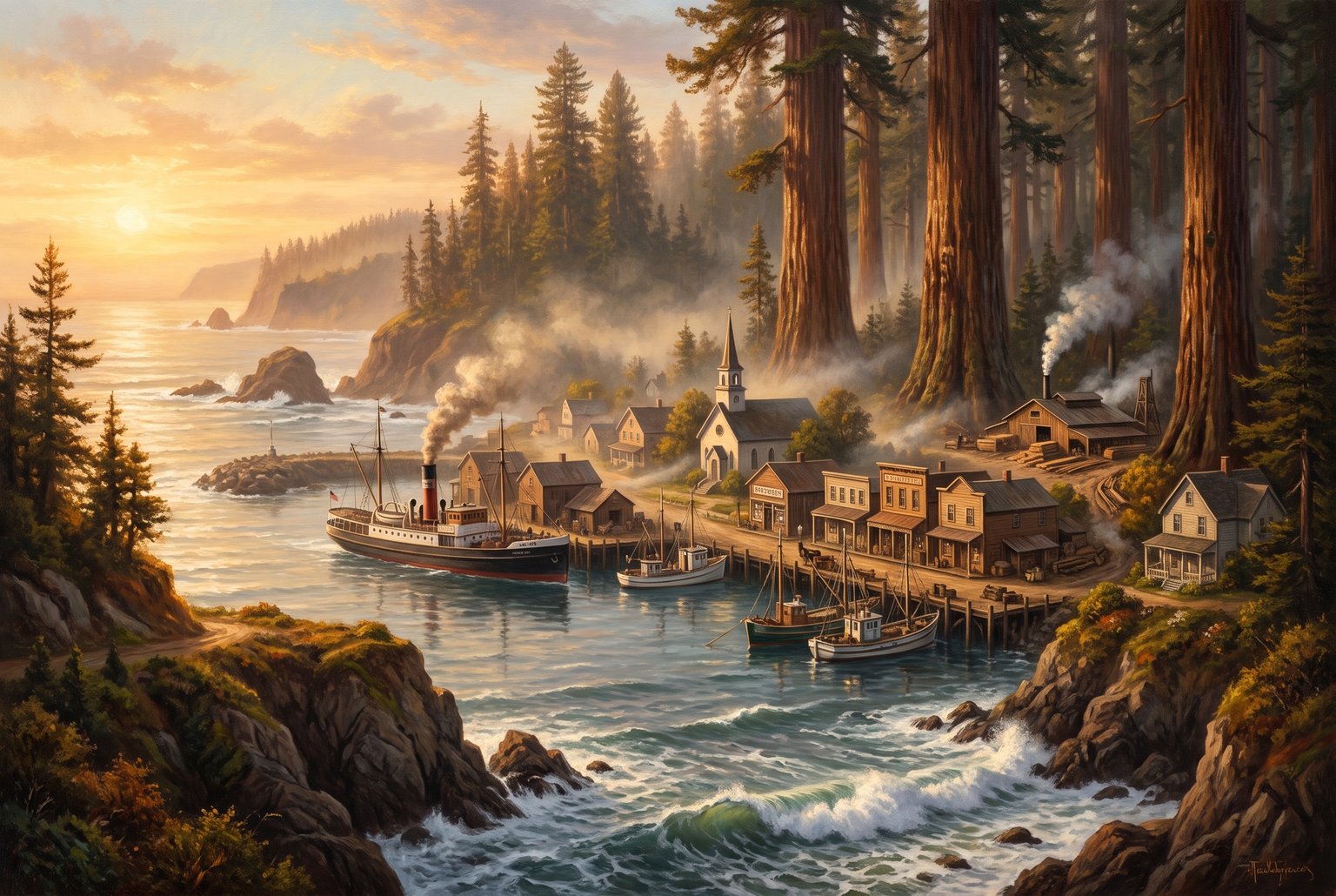
The recorded history of Briarmont Township and Hartwell County — from the first coastal landing to the disappearances that still shadow the county. Dates follow the public record; where the town's deeper history disagrees, the entries say so.
 The Lore — Full history Briarmont Wiki
The recorded history of Briarmont Township and Hartwell County — from the first coastal landing to the disappearances that still shadow the county. Dates follow the public record; where the town's deeper history disagrees, the entries say so.

Briarmont Township is formally established as a small coastal settlement. In public history, this becomes the town's official founding date. In deeper history, it is only the beginning of the recorded settler community, not the beginning of human presence in the region.
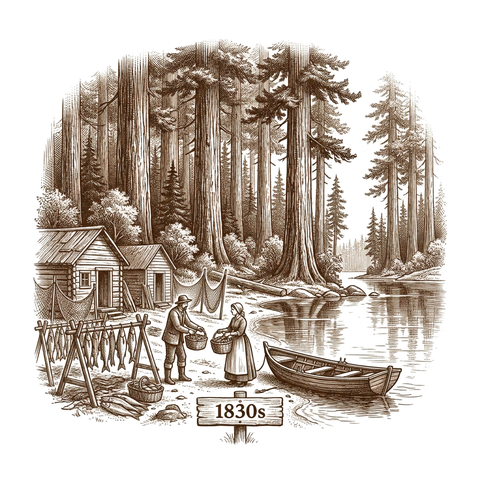
Briarmont survives as a refuge settlement. Its people live through fishing, hunting, small gardens, timber use, coastal trade, repair work, and peaceful exchange with nearby Wiyot villages. The settlement thrives only because it remains small, practical, and bound by the rules of restraint demanded by the land and the people who know it best.
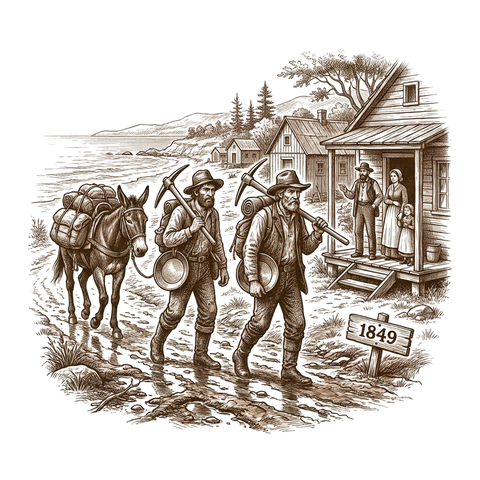
The Gold Rush brings strangers through and around Briarmont. Prospectors and opportunists arrive looking for mineral wealth. They find little or none. The older settlement does not welcome extraction without limits. Newcomers who accept local rules may remain; those who refuse restraint are pushed away where possible.
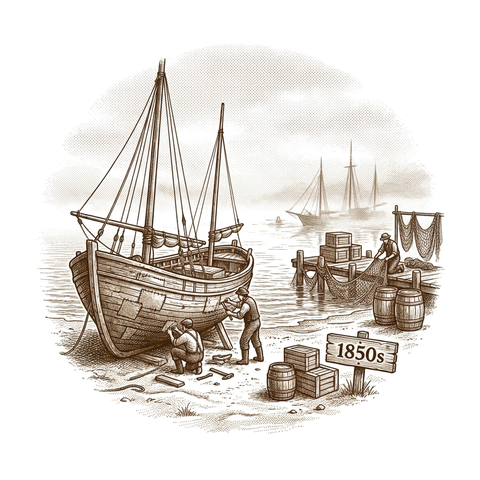
Briarmont remains poor but functional. Its survival still depends on trade, resource knowledge, modest living, and a working relationship with nearby Wiyot communities. The danger is not that this relationship has collapsed, but that the town lacks the money, numbers, and force to defend it against a larger industrial appetite.
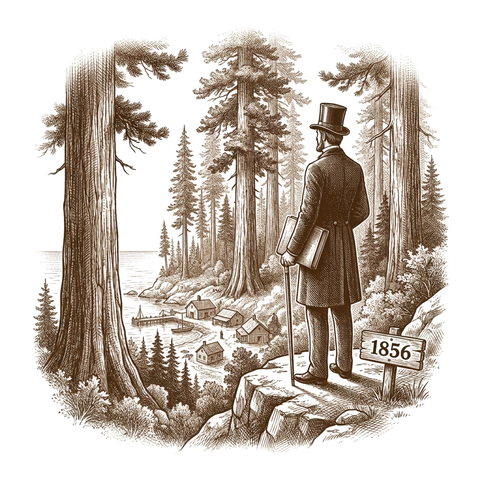
Elias Hartwell arrives in Northern California. Unlike men still chasing gold, he sees the value in the redwoods, labor, coastal access, and a struggling settlement that can be made dependent on him.

The Hartwell Timber Company is founded. The timber boom begins. Briarmont is transformed from a small, low-footprint coastal settlement into a company-driven timber town.

Hartwell County is founded. Elias Hartwell makes claims to the nearby forests and officially forms a county.
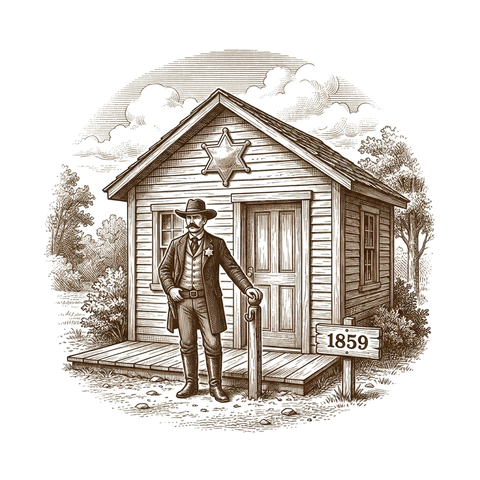
The Hartwell County Sheriff's Department is founded. Elias Hartwell appoints Edward Plainview as its first Sheriff.
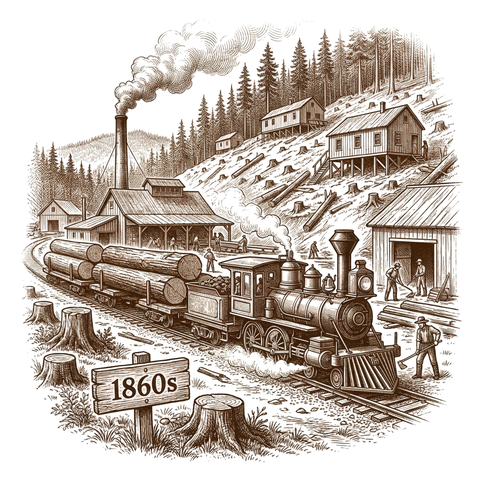
Hartwell expands aggressively. Roads, camps, mills, private rail, boarding houses, workers, merchants, and camp followers reshape the town. Prosperity grows through intimidation, armed pressure, land seizure, resource depletion, and the conversion of Wiyot relationships into company ownership.
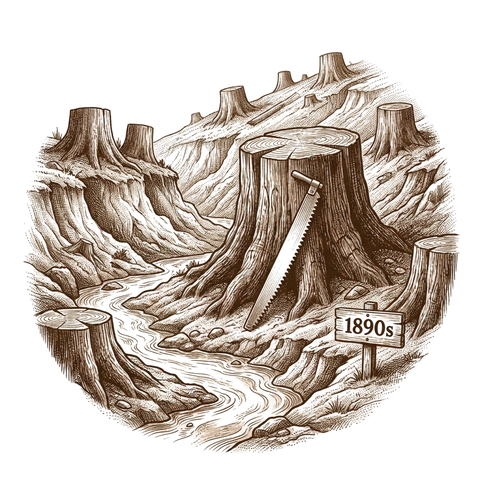
The consequences of Hartwell's extraction become difficult to ignore. Accessible old growth has been cut heavily. The hillsides are exposed and unstable. Creeks are silted. Salmon runs have collapsed or diminished. The violence that made the boom possible is increasingly hidden beneath civic pride and company language.

Hartwell dies without heirs. His estate enters civic limbo after debts are settled and company assets are dismantled or sold.

Clarence Ashton, the sole executor of Hartwell's estate, dies. The estate remains in limbo for another two years.

The Oakridge Institute of Forestry and Land Sciences is founded on the former Hartwell estate. Its first mission is to study and repair the land damaged by the industry that made Hartwell wealthy.

Oakridge grows into a broader college while preserving unusually deep records of Briarmont's landscape, surveys, field notes, maps, and local contradictions.

The Oakridge Institute of Forestry and Land Sciences begins its transition into a broader academic institution. Theodore Crenshaw steps down and hands Oakridge over to its new president, Arthur Bellamy.
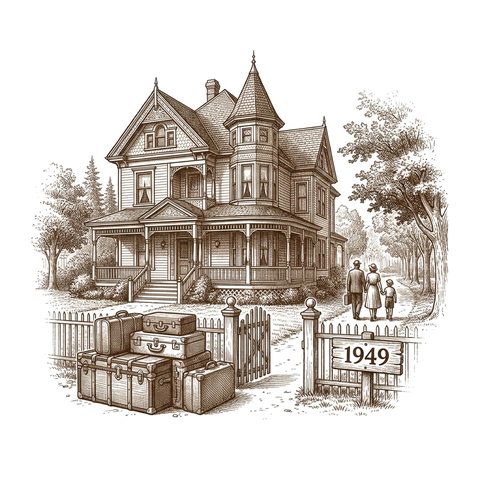
Ward Ashton, Clarence's heir and last direct descendant, donates the family home to Oakridge College. The building becomes a student center and dormitory; its dedication plaque goes up the following spring, and by 1949 Ward Ashton and his family have left Briarmont.