
 | |
| Harold Humbolt | |
| Born | 1924 |
|---|---|
| Died | 1959 |
| Honorific | Sheriff |
| Nickname | Hal |
| Sex | Male |
| Current status | Missing — Declared Dead |
| Organization | Hartwell County Sheriff's Department |
| Past ranks | Sheriff |
Legacy
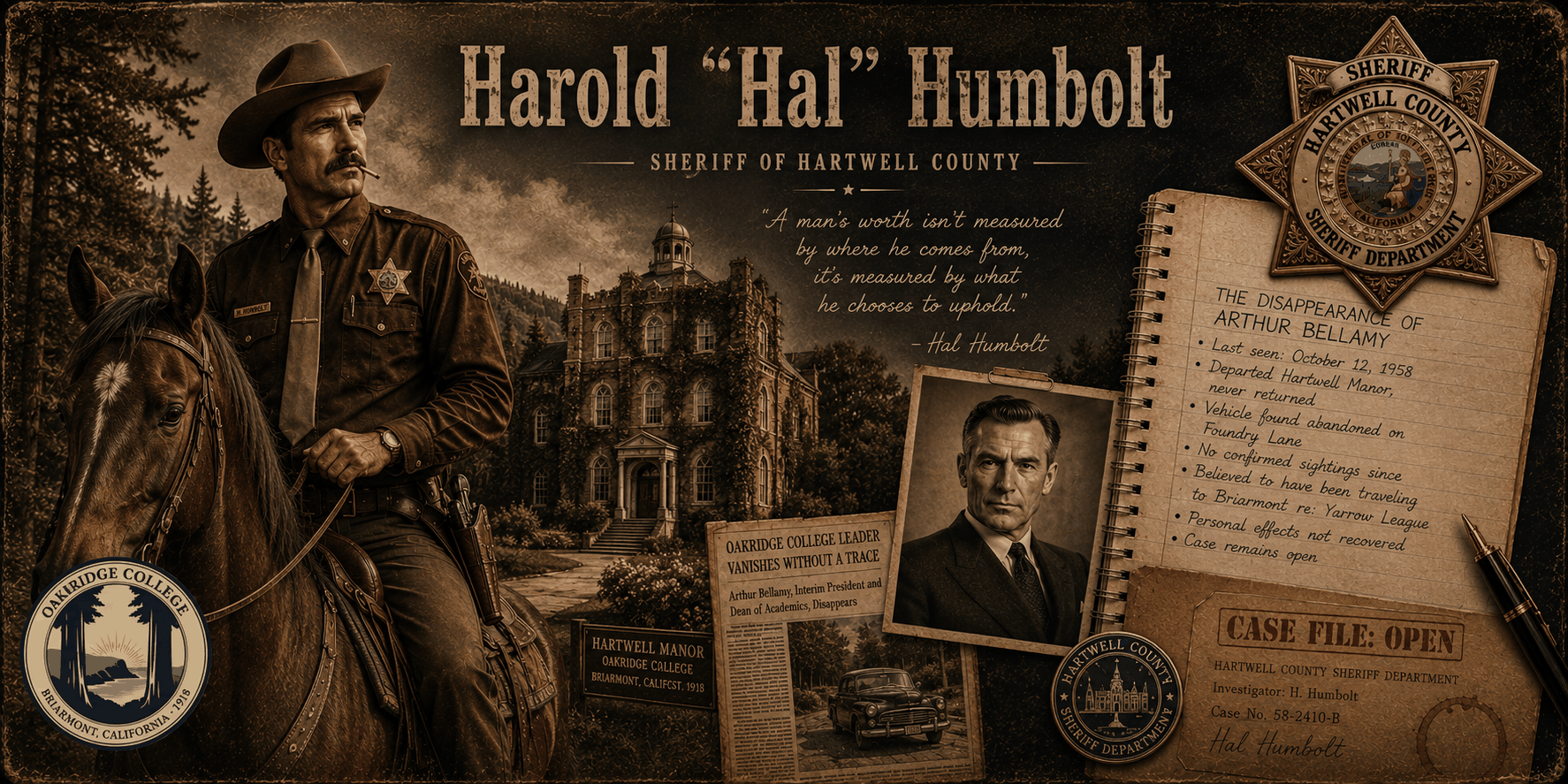
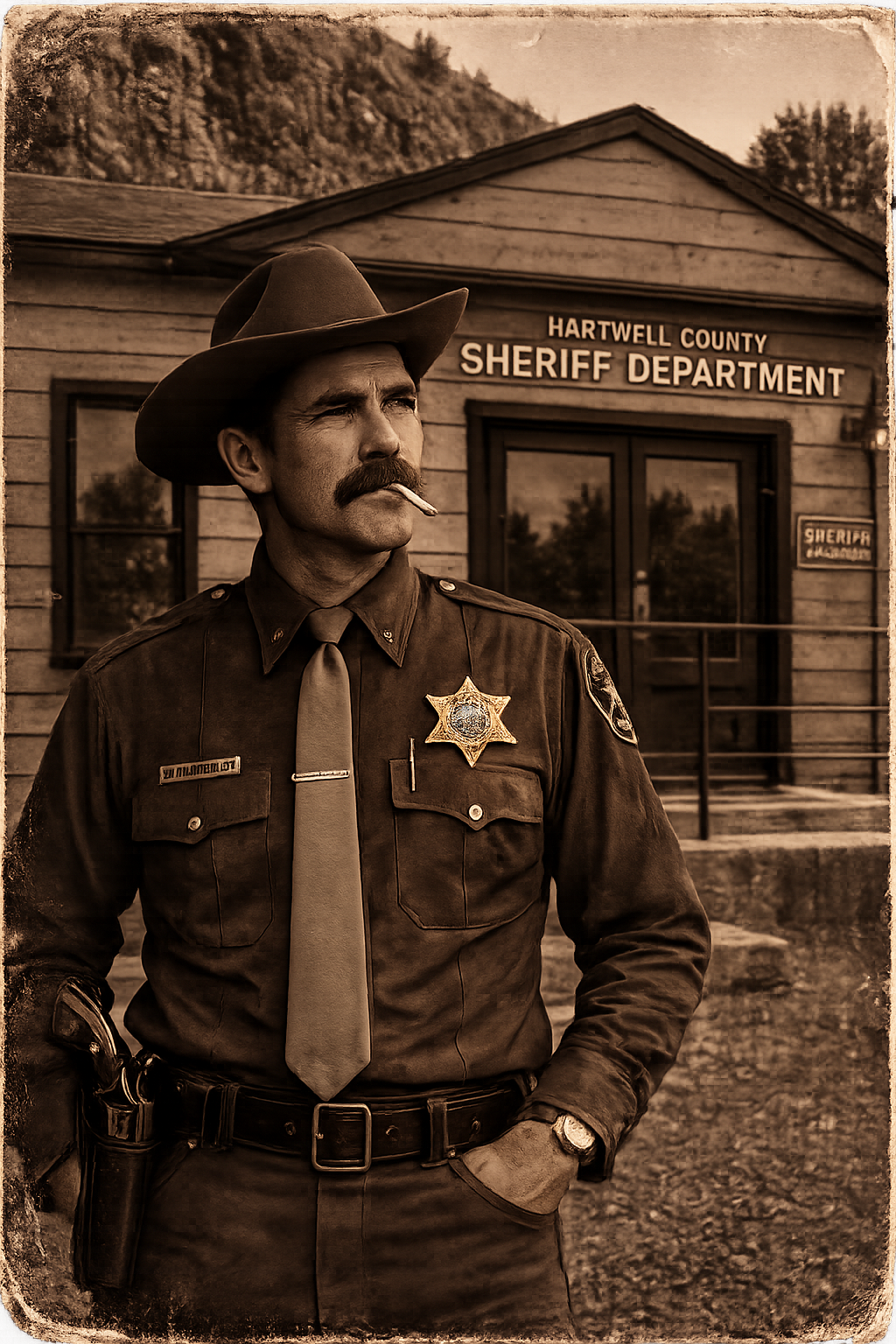
Harold “Hal” Humbolt is remembered as one of the most iconic sheriffs in Hartwell County history. Part of that reputation comes from his appearance: the cowboy hat, the thick mustache, the cigarette, the Marine bearing, and the mounted patrol image all made him easy for the public to remember. In photographs and local memory, he often appears less like a bureaucrat and more like a frontier sheriff displaced into the modern age.
His legacy is tied most strongly to three things: his military service, his reform of local patrol culture, and his disappearance.
As Sheriff, Humbolt helped shape the department’s mid-century identity. He represented a bridge between the older rural sheriff’s office and the more modern county law enforcement agency that would emerge later. He understood Briarmont’s forests and back roads, but he also came from a military background that valued discipline, field readiness, and chain of command.
The Mounted Patrol Unit remains his clearest institutional legacy. What began as a practical unit for rural patrol, crowd management, special events, and difficult terrain became one of the department’s most recognizable public symbols. Even after his disappearance, the unit continued to connect the Sheriff’s Department to Briarmont’s rural character and to Humbolt’s personal love of horses.
His disappearance changed how the county remembered him. Before 1959, Humbolt was a popular but controversial sheriff with rivals, habits, and a strong personality. After 1959, he became part of Briarmont’s forest mythology. The discovery of his badge without his body gave the case a symbolic weight that ordinary missing-person cases rarely carry. To many residents, it felt as if the forest had not only taken a man, but had taken the authority he represented.
Humbolt’s name is now inseparable from the Bellamy-Humbolt disappearances. Alongside Arthur Bellamy and the three unnamed Oakridge students, he remains one of the central figures in Hartwell County’s most famous cold case. His life represents service, local pride, and old-fashioned county law enforcement. His disappearance represents the limits of that authority in a county where the forest has always kept some of its secrets.