
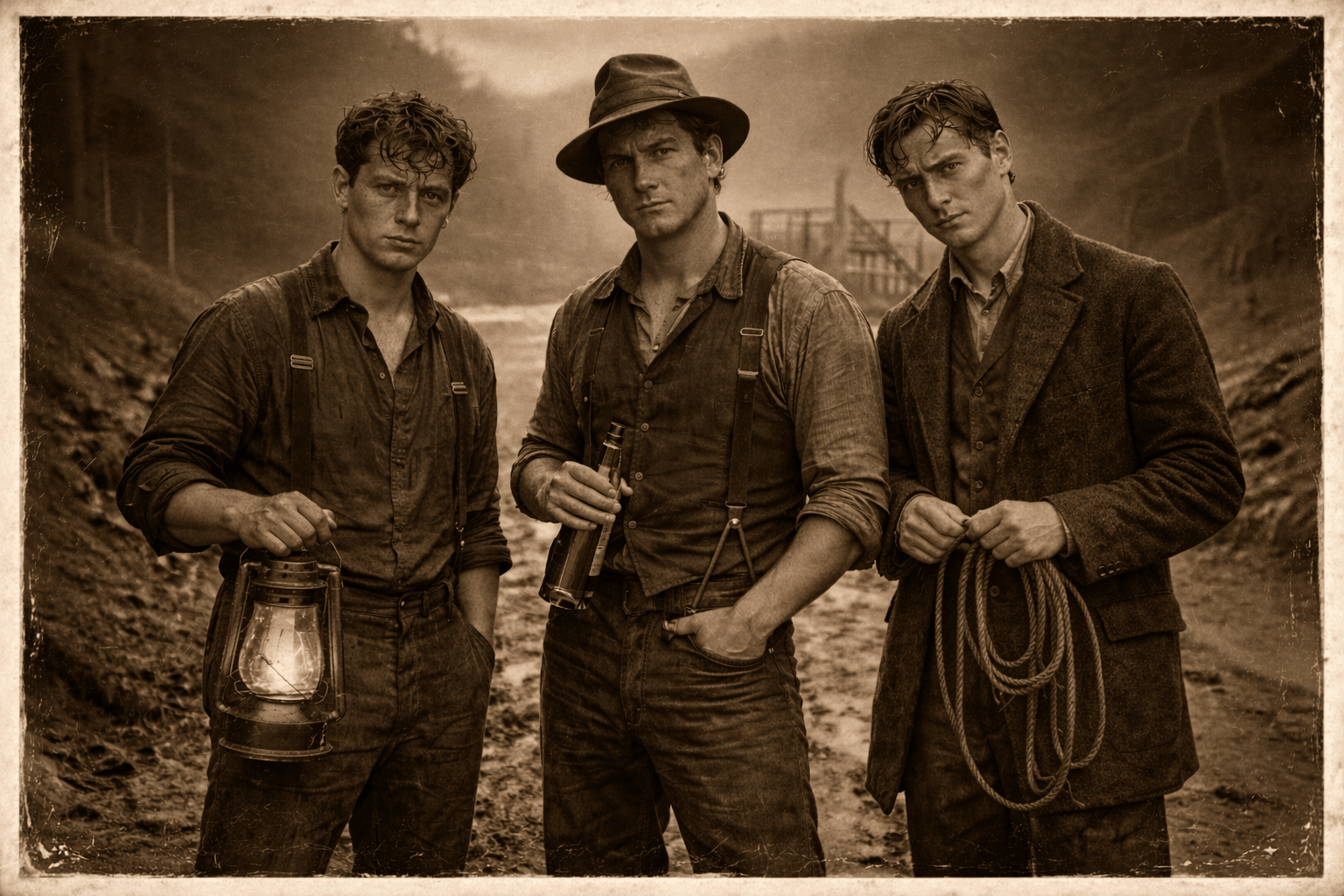
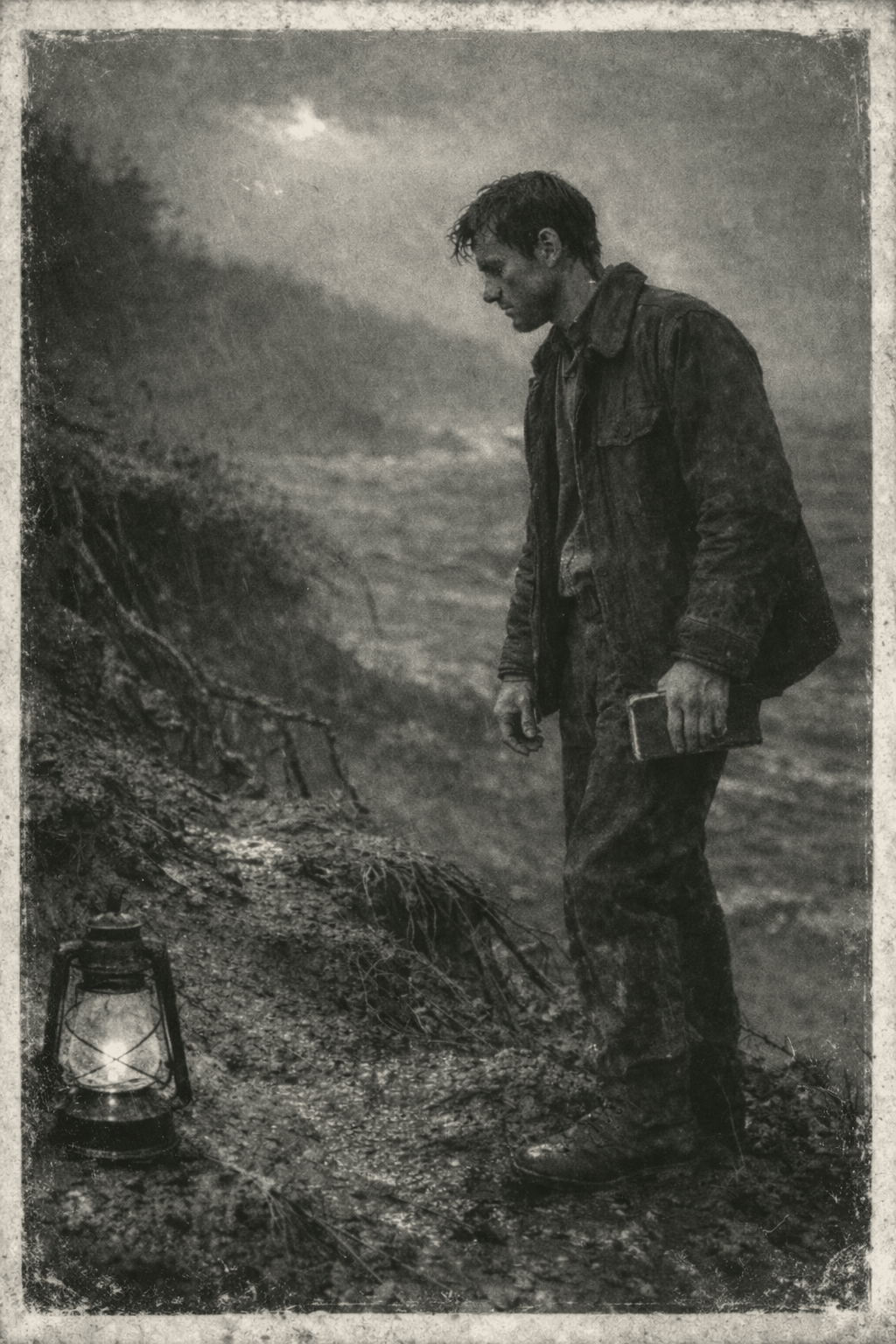
 | |
| Fen Calloway | |
| Born | 1901 |
|---|---|
| Died | 1979 |
| Gender | Male |
| Organization | Alpha Chi Epsilon Fraternity |
| Affiliations | Oakridge College |
Overview
Fen Calloway was the second of the three co-founders of Alpha Chi Epsilon (AXE). A scholarship student from the Central Valley, he arrived at Oakridge Institute of Forestry and Land Sciences in 1919 carrying the particular shame of an accent and a poverty that marked him as an outsider in every seminar room.
He had come to Oakridge because someone needed to understand why the hillsides were sliding into the rivers. He had decided, with the flat determination of someone who has never had the luxury of hedging, that he intended to be that person.
He was the one who woke when the lamp was missing. He was the one who went out first.
Description
Fen was raw-boned and watchful, with the stillness of someone who had learned early that speaking without thinking was a resource he couldn't afford. He had an inland valley accent that softened over his years at Oakridge but never disappeared entirely, and he was aware of it in a way that occasionally made him sound more formal than he intended.
He had a habit of listening to a conversation for longer than he felt comfortable before entering it. People who didn't know him sometimes read this as arrogance. It wasn't. He was deciding whether what he had to say would be useful.
Traits and motivations
Fen thought in systems - about cause, condition, consequence. This made him an exceptional scientist and occasionally an exhausting person to argue with. He was not cold, though people sometimes needed time to learn this. He was careful. He had grown up in circumstances where imprecision cost something real, and he had carried that discipline into everything he did.
He was motivated by a need to make the damage legible. The hillsides sliding into the rivers, the salmon runs collapsing, the thinned soil on his family's farm - he noticed these were all connected, and the connection needed to be documented and addressed. He had a scientist's faith that understanding was the first form of repair.
What he came to understand, through the founding winter, was that this applied to people as well as landscapes.
Routine
Fen's days at Oakridge were structured around the library and the field in roughly equal measure. He was the first student in the reading room most mornings and one of the last to leave. He ate quickly and without much attention to what he was eating.
After the founding winter, he added a third element to this routine: he checked in. Just a knock on a door and then a question he asked in passing, or a note he left where it would be found. He had learned, in the weeks he spent rearranging his life around Holt's recovery, that attending to people required the same daily discipline as attending to the land.